Folding Bikes Blog

The Who on Tour with Montague Bikes

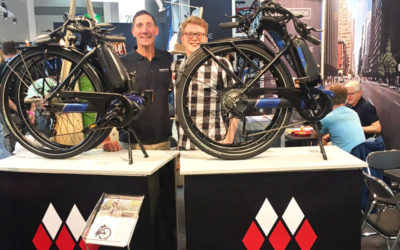
It’s no secret that Montague folding bikes are great to travel with. And when your occupation has you traveling constantly, a Montague bike can make a great companion on the road. When that occupation is touring with one of the greatest British rock bands of all time, you’ll find yourself in a new city every night. Recently, our friends with a little band called The Who, gave us a call and said they’d be coming through Boston. Terry their Merch Manager has been touring with a Montague bike by his side for years, but this time, keyboard player and backing vocalist, Loren Gold wanted to get his hands on a Montague. Loren has been the keyboard player for Roger Daltrey since 2009, and joined The Who for their 35 stop Quadrophenia tour.

Loren1

Having a bike on tour offers transportation in each new city, allows you to tour the sites and experience the area by bike, and gives you a way to workout without being stuck in the hotel gym. We brought by a Montague FIT for Loren, which will accompany him on The Who’s European tour this summer:

Loren2

Terry and Loren were both nice enough to show us around and hook us up with tickets to the show. It was one that will not be forgotten. Roger Daltrey’s voice sounded as sweet as it did 40 years ago, and Pete Townshend has not lost a step (although he didn’t smash any guitars this time around). Loren added lush textures and vocal harmonies, and Terry managed the merch like no other. In all seriousness, when you go see a band decades after their heyday,  you worry they might not “have it” anymore, but The Who absolutely killed it. They were tight, they were energetic, and they played the classics to perfection like they wrote them yesterday. 

photo 14

photo 11

photo 2

photo 4

photo 10

photo 1

If you travel for work or even for pleasure, a Montague bike is the perfect thing to bring along. Arriving in a new city, there’s nothing I’d rather have than a bicycle. Check out our full line of folding bikes at http://www.montaguebikes.com/.

To Terry and Loren: Thanks again and good luck on the European tour this summer!

Bookmark and Share
Posted in Adventure, Events, Lifestyle, Travel | Tagged , , , , , | Leave a comment

Bikes Not Bombs & Montague

IMG_1367

Dave Montague with donation at Bikes Not Bombs HQ

We did our “spring cleaning” at the Montague headquarters a little early this year. In the process of organizing, we gathered up a truckload of bikes, frames, and components to donate to a wonderful organization here in Boston called Bikes Not Bombs. Located in Jamaica Plain, just south of Boston proper, Bikes Not Bombs has been working locally and with communities across the globe since 1984, to encourage social change with the bicycle. Locally, they offer youth programs where teens can learn about bicycle safety, get hands on mechanic skills working on bikes, and earn a bicycle for themselves in the process. The majority of the bicycles collected, repaired, and built by BNB are sent overseas to economic development projects in Africa, Latin America, and the Caribbean.

ability-bikesSince 1984, Bikes Not Bombs has sent over 46,000 bikes to their partners in 13 different countries. But in addition to providing the bikes, they also provide extensive technical assistance and support to these programs, ensuring that they can maximize the impact of their work. Each of their partners has unique needs for bicycle programs in their community, so they work closely with BNB to ensure these needs are met. In Koforidua, Ghana, BNB works with Ability Bikes Cooperative, a shop that is cooperatively owned and operated by physically challenged people. Not only have they become a foundation for the bike market in Koforidua, strengthening the local economy and keeping more bikes repaired and on the road, they’ve also helped to change social perceptions of physically challenged people in society and redefine their role as highly valued.

VBPIn Ghana and Sierra Leone, BNB works with the Village Bicycle Project to bring bikes to the most rural areas and organize village based workshops where people can buy bikes at subsidized costs, and receive training in bike maintenance. In these rural areas, bicycles offer an affordable mode of transportation, helping improve access to basic resources such as education, health care, jobs, and markets that would normally be too far away.

BicimolinoDesgranadoraOne of their most unique partners is BiciTec in Guatemala. BiciTec builds bicycle powered machines or bicimáquinas, such as corn de-grainers, corn grinders, water pumps, coffee depulpers, and macadamia nut shellers, using recycled bike parts. They help people in rural areas of Guatemala increase their productivity in a way that is both economically and environmentally cost effective. BNB helps by providing parts, as well as training in bicimáquina design and fabrication, assistance setting up enterprises to build them, and collaborating to further bicimáquina technology regionally and internationally.

At Montague Bikes, we were happy to donate bikes and bike parts to the Bikes Not Bombs cause, and be a small part of the sweeping social change they’ve started. There’s certainly a lot more work to do, and if you’d like to donate, head over to https://bikesnotbombs.org/.

Bookmark and Share
Posted in Activism, Environment, Events | Tagged , , , | Leave a comment

Montague Quick Release Fender Installation

Two of our folding bike models, the Navigator and the Boston 8, feature quick release fenders on the front and rear. Fenders are an absolute necessity if you’re riding in foul weather, but even a wet road after the rain can leave you with soggy shoes and pants if you don’t have the proper protection. Our quick release fenders can now be purchased for use with any of our Pavement Bikes. Your FIT, Crosstown, or single speed Boston can now offer that same protection from rainwater and road grime.

For easy removal, these fenders clip onto brackets that mount using the brake caliper bolts. The installation procedure might not be obvious at first, but it’s fairly simple. If you purchase one of our aftermarket fender kits, it will include some extra hardware. The only pieces you will need are the fenders themselves, and these two brackets:

Start by removing the front brake caliper with a 5mm allen key:

Once the caliper is free, the front bracket (shown below) can be installed. It will pass under the fork crown, with the clip in the rear:

To secure it, pass the brake caliper bolt through the slot in the bracket, and thread the nut back on from the back:

Now you can slide the fender in the clip, and close the lever to lock it:

Installing the rear fender is a similar procedure, but the bracket is a bit different. Again, start by removing the brake caliper:

With the aftermarket fender kit, you’ll have an extra bracket (one more than you need). The correct one for the rear is the longer, narrow, two-prong bracket. The narrower bracket is designed to prevent any interference when folding the bike. The slotted section of the bracket goes between the brake and the frame, and the rest extends up and over the top of the brake caliper. Thread the nut back onto the brake caliper from the underside, and tighten it up:

The rear fender has the clip built in. Slide it onto the bracket, and close the lever. If either of your fenders seem off center from the wheel, you can correct that by loosening the brake caliper bolt, and rotating the bracket:

There you have it, protection from the elements, and easy, quick release removal:

Bookmark and Share
Posted in Commute, Maintenance | Tagged , , , , , , | Leave a comment

Montague Overhaul VIII: Saddles and Saddle Position

Over the past few weeks, I’ve given you a step by step look at building a completely custom, fixed gear folding bike. Today I’m going to put the finishing touches on with a new seatpost and saddle, and talk a bit about proper saddle positioning.

Saddles are perhaps the most often replaced or customized part on a bike because let’s face it, we’re all made a little different. What’s comfortable for me may not be comfortable for you. There are plush saddles, narrow saddles, wide saddles, spring saddles, and countless different shapes and materials. You might think that the biggest, cushiest saddle you can find would be the most comfortable, but this is usually not the case. What you want from a bike saddle and what you would want from a chair for example, are very different. You don’t actually “sit” on a saddle in the traditional sense, which is why it’s called a saddle, and not a seat. When on a bike, your weight should be evenly distributed between the saddle, handlebars, and pedals. The saddle should support your sit bones, and allow free movement of  your legs. One of the problems with a big cushy saddle is that while pedaling, your legs can rub against it and cause discomfort.

Onto the task at hand. I have a Prologo Kappa saddle I’ll be putting on my Boston build:

I also have a brand new FSA seat post. When installing the seatpost, you definitely want to use grease. Because the post fits so snugly in the seat tube, any amount of corrosion can result in the post completely seizing in the frame. I’ve had to deal with stuck seatposts before, and it’s no fun:

For reference, pre-2012 Montague bikes use seatposts with a 27.2mm diameter, while 2012 and beyond use 30.0mm seat posts. The clamp sizes would be 31.8mm and 34.9mm respectively.

Now we can attach the saddle to the post. There are a couple different designs for the clamp that holds the saddle, but most modern posts have a removable top plate with a bolt from the bottom. The plate clamps down on the rails, which run parallel on the underside of the saddle. You can slide the saddle forward and back, and also tilt it to change the angle:

Parallel to the ground, and clamped in the middle is a good place to start. Once you try it out and see how it feels, you can start to make changes.

Saddle height is extremely important because it determines how far your leg extends on each pedal stroke. Have it too low, and your knee will be bent even at the bottom of the pedal stroke. You’ll experience pain in your knee and decreased power. Have it too high, and your knee will be hyper-extending at the bottom of each pedal stroke. You’ll experience pain this way too (probably in the back of your knee rather than the front) and you could do long term damage.

At the bottom of the pedal stroke, you want your leg nearly extended all the way with just a slight bend. The easiest way to set saddle height initially is to sit on the bike, and put your heel on the pedal while it’s at the bottom. Position the saddle so that with your heel on the pedal, your leg is perfectly straight, knee locked. Once you move the pedal to the ball of your foot (where it should be while pedaling), the added length of your foot should make it so your leg has that slight bend you’re looking for.

Once you can put some miles on the new setup, take note of how it feels. Pain in the front of your knee usually means your saddle is too low. Pain in the back of your knee, means it’s too high. If you are making adjustments, move in small increments. Even a few millimeters can make all the difference.

And now…my custom Boston is finally done!


If you want to see the entire process of customizing my Montague Boston, check out the previous posts on the build:

Montague Boston Overhaul: Going Custom

Montague Overhaul II: Headset

Montague Overhaul III: Wheels

Montague Overhaul IV: BB and Cranks

Montague Overhaul V: Track Cogs & Chains

Montague Overhaul VI: Brakes

Montague Overhaul VII: Fixed Foot Retention

Bookmark and Share
Posted in Commute, Maintenance | Tagged , , , , , , , , | Leave a comment

Fixed Foot Retention: STRAPS

Last time we checked out traditional toe clips and straps as one option for foot retention. Another option, which has become very popular for fixed riding in the last few years, are velcro foot straps. The system was originally designed by the guys at Hold Fast in Brooklyn, NY. Around 2008, when fixed freestyle was taking off, riders were breaking toe clips left and right. Partially inspired by the old Power Grips, mostly inspired by a need for extremely durable, comfortable, and strong foot retention, the Hold Fast FRS was born.

Today, there are several companies making foot straps with this same design. Bag companies like ReLoad and Burro, and components makers like Fyxation are all getting in on the action. I have a pair of Fyxation Gates pedal straps, and Shadow Ravager platform pedals. Foot straps like this use a BMX style platform pedal, more evidence of their fixed freestyle heritage:

The straps themselves are actually pretty simple:

Just like the cage pedals we put toe clips on, these platform pedals have an opening all the way through the pedal body:

With the the strap face down, feed the two narrow strips through the pedal:

Separate the two wider straps and fold the inner one over the pedal:

Cross the two narrow straps and stick them to the wider one. The velcro should hold them in place:

And finally, just fold over the final strap. You can slide more or less of it through the buckle to get the perfect fit for your feet. They’re very easily adjustable if you ride in a variety of different shoes:

Now put them on your bike. Get out there. And tear it up.

Bookmark and Share
Posted in Commute, Maintenance | Tagged , , , , , , , | Leave a comment

Montague Overhaul VII: Fixed Foot Retention

In putting the final touches on my custom Montague Boston folding bike, I had to decide what type of foot retention to use. On a fixed gear, you can control your speed and slow down simply by slowing your cadence. By putting back pressure on the pedals, you can slow the bike or even lock the rear wheel and skid. To do this effectively, you need foot retention; something to lock your feet into the pedals. I run clipless pedals on some of my other bikes, but I decided to go for the classic toe clips and straps for this build.

Just about any pedal with a metal cage can have toe clips mounted on them. I went with All-City track pedals and picked up a pair of their leather double straps and clips. I’ve found double straps to be considerably more secure than single. They really hug your feet and have a nice snug feeling.

The clips should include bolts to mount them. Put the bolts through the slots in the bottom of the toe clips, through the front of the pedal, and thread the nut on the back. To be sure you’re putting the clip on the correct side, first determine which is the Right pedal and which is the Left. If you can’t tell, it’s usually stamped in the metal near the pedal threads.

Once the clips are secured, you can install the straps. Most pedals that are toe clip compatible have openings in the pedal body for the strap to go through:

Start by passing the straps through these slots from the outside in toward the pedal threads:

Then, wrap them up and through the toe clip. If you’re using double straps, be sure to get toe clips designed for doubles:

 And finally, send them through the buckles:

Thread the pedals into your bike’s crank arms and you’re ready to go. Don’t forget the left pedal is reverse threaded. Turn it counter-clockwise to tighten. Once you try them out, you’ll probably have to adjust the tightness of the straps to fit your feet just right. If you’re new to toe clips, it might take some practice to get in and out of them smoothly, but after a couple rides it will be second nature.

Bookmark and Share
Posted in Commute, Maintenance | Tagged , , , , , | 1 Comment

Montague Overhaul VI: Brakes

I’m nearing the end of my custom Montague build. Most of the parts are in place and it’s now time to install a brake. Fixed gear bikes give you a tremendous amount of control with just your legs. You can easily regulate your speed and come to a stop without even touching a brake, but it’s nice to have one when it’s needed. Some riders choose to go without a brake (and I’d be lying if I said I haven’t done so in my younger, wilder days) but when you need to stop abruptly, a proper brake can save your life.

On any bike, the front brake provides far more stopping power than the rear. When you brake and the bike begins to decelerate, your body has momentum and your weight naturally shifts forward. The front wheel bears this weight and momentum and is therefore much more effective in stopping you. With the ability to regulate your speed and slow down with the fixed drivetrain, a single front brake is more than adequate for additional braking. Just remember, pulling a front brake hard can send you over the handlebars. Just be aware of your position on the bike and shift your weight back if you’re braking hard.

I’ll be installing a dual pivot road caliper. Caliper brakes are the design of choice for most bikes meant for on road riding. They mount to a single point above the wheel, which allows the brake arms to automatically center on the rim (theoretically). Larger tires require longer and deeper calipers, which in turn have less mechanical advantage. This is why you don’t see caliper brakes on mountain bikes or cruisers with fat tires.

Calipers brakes are specific to the front or rear but the main difference is the length of the connecting bolt. The front has to pass all the way through the fork crown, and will be a bit longer than rear. Simply slide the bolt through from the front, and a recessed nut connects in the back. When tightened, the nut is flush with the fork, giving it a nice smooth look:

I’ve mounted an Avid mountain lever on my riser bars. While the stem clamp section can vary in diameter from handlebar to handlebar, the grip section is standard. You usually don’t have to worry about whether or not your lever will fit. However, I have mounted levers on older bars that were a bit small, and a piece of old innertube makes a great shim in that situation.

Where the cable enters the lever, there there is a barrel adjuster. Turning this allows you to fine tune the tension on the brake cable. In order to get the cable in initially, you need to turn the barrel adjuster so the two slots line up:

On one end of any bicycle brake cable is a metal piece that allows it to hook into the brake lever. There are road bike cables which are made for drop bar levers, and there are mountain bike cables which are made for any flat bar brake lever. The only difference is the shape of that end piece. Some cables come with mountain on one end and road on the other. With these, just cut off the end you don’t need. Push the cable through the slot in the barrel adjuster:

That cable end then hooks into the round hole on the lever:

Slide the other end of the cable through the housing, then through the cam adjuster on the brake. You want your housing to be long enough that it curves gradually down to the brake. If it seems stretched or bent, the cable won’t slide through it easily, making the brake more difficult to pull. The housing stops at the cam adjuster and the cable continues down to a nut where it’s held in place. Before you tighten this up, you need to tension the cable. Make sure the housing is seated in the cam adjusters on both ends, and pull down on the cable to get it as tight as you can (pliers can be helpful to grip the cable).

You also want to set the pad distance to the rim. To make the brakes as efficient as possible, you want the pads to rest as close to the rim as they can without touching. You can physically squeeze the brake together with your hand, then pull the cable down again to tension it. While still squeezing the brake together, tighten the nut holding the cable:

Spin the wheel to make sure the pads aren’t rubbing anywhere, and pull the lever to test it. If you want to make the pads a bit closer, you can now utilize those cam adjusters. Turning them counterclockwise will further tension the cable and move the pads closer to the rim.

The pads can also move up and down, and rotate, relative to the caliper. You want them to be centered on the rim’s braking surface. Too high and they could rub your tire and damage it. Too low, and they could hang below the braking surface and provide less stopping power.

If everything checks out, your brake is all set. You should feel safe knowing you can make an abrupt stop if needed. Next time, we’re going to check out some popular fixed gear foot retention: traditional toe clips with straps, and the newer velcro toe straps.

Bookmark and Share
Posted in Commute, Maintenance | Tagged , , , , , , | Leave a comment

Montague Overhaul V: Track Cogs and Chains

Fixed gears have been popular as winter commuter bikes for years. Long before messenger culture brought them to the limelight in the early 2000′s, hardened winter riders chose them for their simplicity and added control in bad conditions. For the last two years, a single speed Montague Boston folding bike has been my commuter. It’s taken a serious beating from all-weather riding, so I’m rebuilding it from the frame up with new components.

Most fixed gear bikes use a threaded track hub, although there are some companies like Resist and White Industries making splined hubs for fixed freestyle. On a traditional track hub, there are two sets of threads side by side. The cog threads onto the inner set, and like a threaded freewheel, your pedaling naturally keeps it tight. However, it would be possible to loosen a fixed cog simply with back pressure on the pedals, so a lock ring goes on the outer threads. The lock ring is reverse threaded, so it can’t loosen as a result of friction from the cog:

For this build, I’m using a fairly unique system made by Miche with an interlocking cog and cog carrier. The carrier threads on where the cog normally would, and different size cogs can then be easily replaced without having to unthread them. This is particularly useful at the velodrome, but I like the idea of being able to easily change gear ratios on my commuter. A lower gear ratio allows for a bit more control in snowy or icy conditions:

Thread the cog, or in this case the cog carrier, onto the hub by hand. As a general rule of thumb, anytime two parts are going together on a bike, use grease. You’ll thank yourself later. No exception here:

With the Miche cog carrier, the cog just slips right on:

At this point, you could use a chain whip to tighten the cog as much as possible. However, I’ve found that it will still naturally get tighter when you start riding, and you’ll have to go back and re-tighten the lock ring anyway. So I usually wait until I have a chain on, put some weight on the pedals to tighten the cog, then make sure the lock ring is secured against it. You can still thread the lock ring on now though:

Now let’s put this wheel on the bike, and install the chain. When you go to buy a chain, you’re going to have a lot of options. They’ll have different widths, and be specified for different numbers of speeds. It can be a bit overwhelming but most bikes will use either a 1/8″ or 3/32″ chain. This is the roller width, or the width between the inner plates of the chain. 1/8″ chains are for single speed bikes while geared bikes use the narrower 3/32″ chain. However, fixed cogs and single chainrings are also available in 3/32″, so make sure you know which you have. And make sure your chainring, cog, and chain all match. I’m using a Miche Pista 1/8″ track chain:

Installing or breaking and re-attaching a bike chain traditionally requires a chain tool. The tool pushes out one of the pins, allowing you to disconnect two links. To mend the chain, the same tool is used to push the pin back in place. Some chains require a new pin or special connecting rivet each time they’re broken. This is not the type of chain I have, so for more info on dealing with these types, I’d check out Park Tool’s website:

Many newer chains have what is called a Master Link. One of the links in the chain has a removable plate on one side which allows you to take it apart without a special tool, and without risking damage to the chain:

If you’re installing a brand new chain that uses a master link, there’s a good chance you’ll still need a chain tool initially, to make it the correct length. If the chain is too long, you’ll need to remove a link or two. Make sure you choose the correct pin to break, as you need to end up with two “inner plate” links for the Master Link to hook into. Amazingly, the chain I had was exactly the right length out of the box. I’ve never had this happen before, but it’s just a function of chainstay length and chosen gear ratio. Wrap the chain around the chainring and rear cog, and insert the master link to connect the two ends. At this point, I would suggest pushing your wheel forward as far as possible for some extra slack to work with:

Once they’re joined, slide the outer plate over the end of the two exposed pins:

Lastly, the locking plate is installed. You’ll see there are small grooves on the end of the pins to stop it from coming off. Slide the plate onto the pins as shown, then push it over until it clicks into place. I’ve found a flat head screwdriver works well to push against the plate:

You can now use the newly installed chain to make sure your cog is tightened on the hub. Put your weight on the front pedal and you’ll probably feel it slip a little as it tightens up. Then, you can tighten your lock ring. It does require a lock ring wrench, but if you’re riding fixed, you should really own one:

Once the lockring is tight and your chain is properly installed, pull the rear wheel back in the dropouts to tension the chain. You want it fairly snug, but it should still give a little when you squeeze the top and bottom sections of chain together (maybe 1/8″ of an inch on each side). A new chain will stretch a little, so expect to re-tension after you put some miles on it. Next time, we’ll take a look at caliper brakes (yes, I’m putting a front brake on my fixed gear…).

Bookmark and Share
Posted in Commute, Maintenance | Tagged , , , , , , , , , | 1 Comment

2013′s New Year’s Revolutions


2013 promises to be a great year. It’s the first time in 26 years (since 1987), that the year has no repeating numbers. In the Chinese calendar, 2013 is the year of the snake. And Montague has some exciting things planned for 2013…

Folding Frames

At long last, Montague is making it even easier to customize its full-size bikes that fold. For the first time ever, Montague is making bare frame sets available, so you can build your ideal bike from the frame on up.  Three different frame sets are scheduled to be available in the U.S. for spring 2013.

For those looking for a light pavement bike that can take a derailleur and multi-speed drivetrain, go with the Fit Custom frame, which will be available in gloss green, and includes a carbon blade fork. You could set it up as a touring bike, a commuter, or even a racing bike:

If you’re more into the single speed/fixie scene, the Boston Custom frame will be available in matte black, and will include a straight blade, cromoly fork. Build it up with a 5-spoke, or deep-V wheels, drop bars, bull horns – whatever your heart desires. Both pavement frames take 700c wheels:

Finally, for the mountain biker, Montague will offer the frame only – no fork. This means that you can set it up with your favorite suspension fork, disc brakes, suspension seat post – whatever you need to get the best ride on the trails. The X90 Custom frame is a hardtail mtb, designed to work with just about any 26″ wheelset:

So if you’ve been thinking that you’d like a full-size bike that folds, but you’ve been holding back because you like to pick and choose your set up, 2013 is your year. See more details here.

A Frame of a Different Color?

If full customization isn’t your thing, never fear – Montague’s full line of complete mountain and pavement bikes will still be available. And Montague is planning to add some new frame colors to select models in its existing line  of pavement bikes. Same great ride, but with a great new look. Stay tuned for more details…

Ride Yourself Into Shape This Year

This is the time of year when many people start thinking about exercising again, especially after holiday indulgences. If you’ve been thinking about bike commuting, a Montague bike is a great way to work a little exercise into your daily routine. If you want to start bike commuting, you can gradually increase your distance day by day or week by week. Just put the Montague bike in your trunk, drive to a convenient parking location, take the bike out, and ride the rest of the way in. A Park & Pedal commute allows you to choose how long your ride is.

Even if you’re an experienced commuter, a Montague bike is  a great option for winter commuting. Because it folds easily, if you ride to work and then find yourself faced with inclement weather for the ride home, you can just take it on the bus or train with you, or even put it right in a coworker’s trunk.

And if you’re more into leisure riding than commuting, a Montague is easy to store inside, even in the smallest apartments. This means that you’ll have a bike on hand, even if you’re going to use it more for weekend rides in the park than for transportation.  Any riding is a great way to get exercise, and with a Montague bike, you’ll always have the option to ride, without having to dedicate a substantial part of your apartment to bicycle storage.

Happy New Year!

What are your riding plans for 2013? We’d love to know!

Bookmark and Share
Posted in Commute, General | Tagged , , , , , | Leave a comment

Montague Overhaul IV: BB and Cranks

I’m right in the middle of rebuilding a Montague Boston as a fixed gear commuter. With all standard components, Montague bikes are really the only folding bikes out there that can be fully customized with any parts you want. I’ve stripped the frame down to the bare essentials,  cleaned and regreased the headset, and prepared my new wheelset. Now I’m going to install the new bottom bracket and crankset.

I have a Shimano, square taper bottom bracket ready to go:

Most modern BBs use sealed cartridge bearings, so you won’t have any loose bearings to deal with. The sealed cartridge design is certainly easier to deal with, and keeps everything better protected from the elements. The drawback is that it doesn’t allow you to access the actual bearings to clean and regrease them. If they do start to go, you need to replace the cartridge.

The first thing to consider when choosing a bottom bracket and crankset, is what type your frame is made for. All Montague bikes, and a large number of bikes on the market now, use a 68mm, English threaded BB. 68mm is the width of the bottom bracket shell, and “English threaded” describes the size and spacing of the threads. Other frames (generally older, European frames) may have French, or Italian threads with a wider 70mm shell. Many new, high end road and mountain bikes are now using press fit bottom bracket cups that do not use threads at all. The spindle is then integrated with the crankset. The design provides weight savings, and apparently, increased stiffness.

Anyway, back to the task at hand. On this BB, the drive side cup is fixed, and the non-drive cup is separate. Make sure the threads in your frame are clean, and apply grease (or lock tight, or teflon tape). There are conflicting opinions on which is best, but I prefer good ol’ fashioned grease:


You should remember from removing the old BB, that the drive side is reverse threaded. You will need to turn the cup counter-clockwise to tighten it. Start by turning it in by hand to ensure it doesn’t cross thread. When necesary, switch to your splined BB tool. There are different tools for different bottom bracket designs, so make sure have the correct one:

You should use a torque wrench to tighten it with the torque specified by the BB manufacturer. In this case, it’s 50-70 N/m. Once that side is tight, grease the non-drive side cup, and start threading it in as well. This side uses standard threading, so clockwise will tighten it. Again, use the manufacturer’s specified torque:

Wipe off the excess grease, and you’re ready for a new crankset:

For this build, I have a set of All-City track cranks. They’re a solid, very durable  single speed crankset, and although I went with black, they do come in a variety of colors:

With a square taper bb interface, crank installation is pretty simple. Just slide the crank arm on to the spindle:

Whether or not to grease the spindle is another one you’ll hear varying opinions about. Some say grease will actually allow you to over tighten the crank arm, making it very difficult to remove later. I went for the dry installation. With the crank arm in place, simply thread the crank bolt into the spindle, and tighten it down (again check what the manufacturer suggests for torque):

Install the other side in the same way, making sure the cranks are 180 degrees opposite of each other. The square taper spindle is symmetrical, so it is possible to rotate either crank arm by 90 degrees, but I guarantee you’ll find it difficult to ride that way. Next we’ll install the track cog on the rear wheel, mount them on the bike, and finish off the drive train with a nice new chain.

Bookmark and Share
Posted in Commute, Maintenance | Tagged | 3 Comments